

Alternative to Meds Center Highlights Glyphosate Exposure Risks and Shares Holistic Detox Plans to Support Mental Health
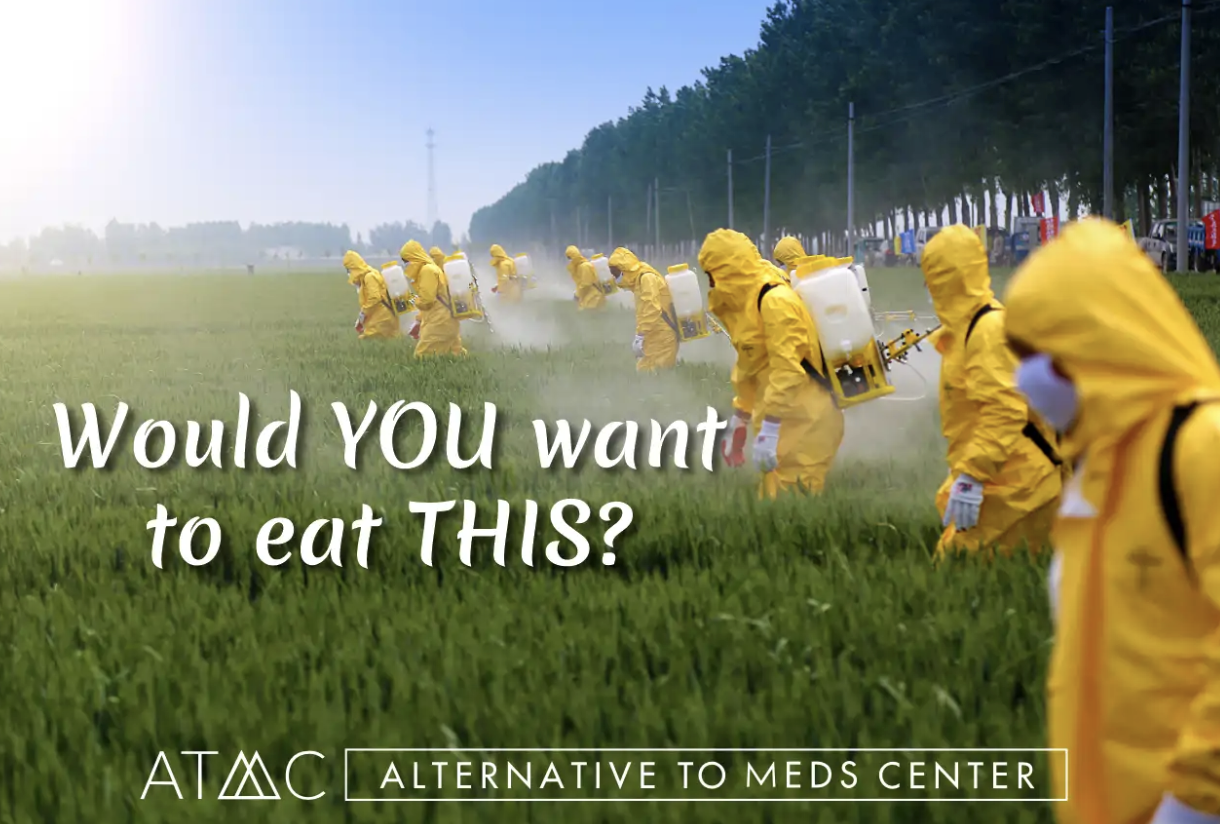
Agricultural spraying practices raise awareness about glyphosate exposure and the importance of understanding potential health risks in modern food production.
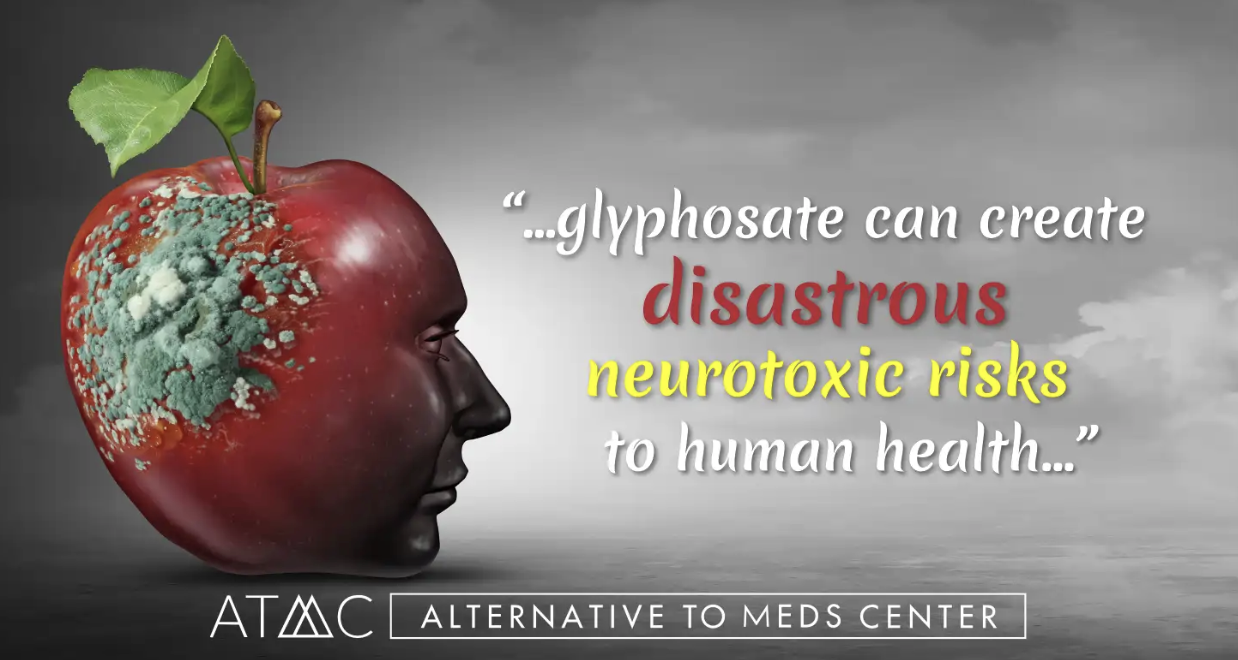
A visual representation highlighting concerns about glyphosate exposure and its potential neurotoxic risks to human health.
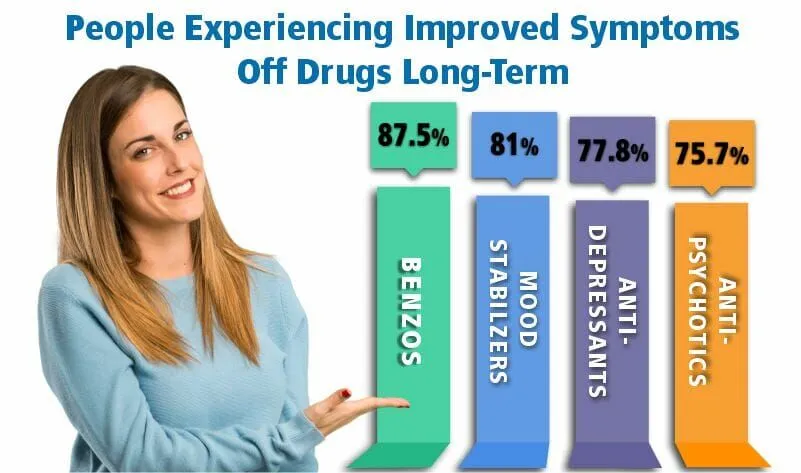
Chart illustrating reported long-term symptom improvement among individuals no longer using psychiatric medications across multiple drug categories.

Fresh foods displayed with GMO indicators to highlight growing awareness of glyphosate exposure, food safety concerns, and the importance of clean nutrition.
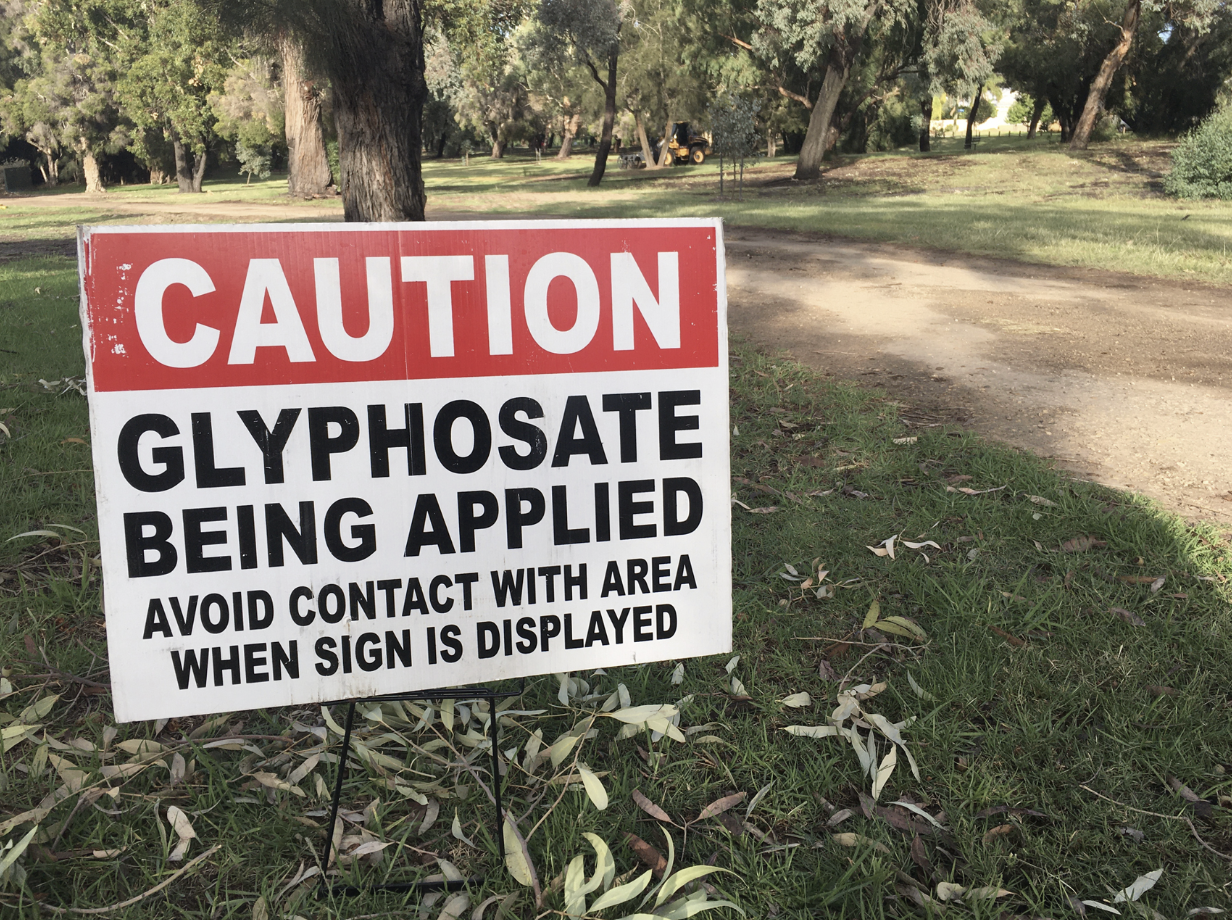
Caution sign indicating glyphosate application in progress, advising individuals to avoid contact with the treated area while the sign is displayed.
Sedona-based Alternative to Meds Center highlights Glyphosate exposure, neurological health concerns, and more used in drug-free mental health recovery
Glyphosate, the active ingredient in many commonly used herbicides, is one of the most widely applied agricultural chemicals in the world. Since its introduction in the 1970s, glyphosate use has expanded dramatically across farming, landscaping, and crop processing. As a result, everyday exposure through food, water, and environmental contact has become an increasing concern for health-conscious individuals and families.
While glyphosate remains widely used in conventional agriculture, questions continue to be raised about its long-term safety, particularly in relation to chronic low-level exposure. Researchers and health professionals have increasingly examined potential concerns involving neurological health, gut microbiome disruption, cumulative toxic burden, and broader systemic stress on the body.
“At Alternative to Meds Center, we believe people deserve access to clear, balanced information about the environmental factors that may affect neurological and overall health,” said Dr. Samuel Lee, MD, an authority in integrative mental health. “Greater awareness helps individuals make informed decisions and take practical steps to reduce toxic burden and better support long-term wellness.”
Understanding Glyphosate Exposure and Mental Health Concerns
Glyphosate exposure may occur through multiple channels, including food residues, drinking water, agricultural drift, and environmental contact. Because glyphosate is also used as a pre-harvest drying agent in some farming systems, trace amounts may remain on foods that ultimately enter the consumer supply chain.
Scientific discussion around glyphosate has increasingly focused on the possible downstream effects of repeated exposure over time. Some research has suggested that glyphosate may influence the body indirectly by affecting microorganisms in the gut, which in turn may impact immune regulation, inflammation, digestion, and neurotransmitter-related processes.
The gut microbiome plays an important role in overall health, including the production and regulation of key neurochemicals such as serotonin and dopamine. Disruptions in microbiome balance have been associated with a variety of physical, emotional, and cognitive health challenges. For individuals already struggling with mental health symptoms, environmental toxic burden may represent one of many overlooked contributors affecting long-term well-being.
Alternative to Meds Center has spent more than two decades educating clients and families about the relationship between nutrition, detoxification, environmental stressors, and mental health recovery. The center’s philosophy emphasizes addressing root contributors rather than focusing exclusively on symptom suppression.
A Proactive, Balanced Approach to Reducing Toxic Burden
Alternative to Meds Center emphasizes that awareness of environmental toxins should not create fear, but should instead encourage practical and informed action. By understanding where exposure may occur and how the body naturally processes unwanted substances, individuals can make daily choices that support better health outcomes over time.
“Our approach to recovery is holistic because mental health is influenced by many interconnected factors,” Dr. Samuel Lee added. “When people strengthen nutrition, reduce harmful exposures, and support the body’s detoxification pathways, they create a healthier foundation for healing, cognitive clarity, and emotional resilience.”
Rather than focusing only on avoidance, ATMC advocates for a broader wellness strategy that supports the liver, gut, hydration, nutrition, and the body’s own natural elimination pathways.
Holistic Detox Strategies for Safer Living
As part of its integrative model, Alternative to Meds Center highlights several natural recovery strategies that may help individuals reduce glyphosate exposure and support detoxification in a safe, sustainable way:
- Choosing organic or pesticide-conscious foods whenever possible
- Washing, peeling, or preparing produce in ways that may reduce surface residues
- Supporting gut health through probiotic-rich and fermented foods
- Increasing dietary fiber and natural binders that help the body eliminate unwanted substances
- Drinking filtered water to help reduce potential contaminants
- Using sauna therapy, hydration, and nutrition-based detox practices to support elimination pathways
- Consulting with qualified holistic health professionals for personalized guidance
These strategies are designed to complement the body’s natural detoxification systems, especially those involving the digestive tract, liver, kidneys, and microbiome.
ATMC also emphasizes the importance of nutrient-dense, whole foods as a critical foundation for both physical and mental health. Clean nutrition supports neurotransmitter function, immune health, energy production, and overall vitality, all of which are important in long-term mental health recovery.
Environmental Toxins, Mental Health, and Drug-Free Recovery
Alternative to Meds Center’s broader treatment philosophy is rooted in the understanding that mental health is influenced by far more than brain chemistry alone. External stressors such as poor diet, environmental toxins, chronic inflammation, digestive imbalance, and medication-related burden may all contribute to emotional and neurological dysfunction.
For this reason, Alternative to Meds Center integrates nutrition and detoxification support, individualized care, and non-pharmaceutical strategies into its holistic mental health programs. The center is known for its safe, supervised tapering approach and its commitment to helping individuals pursue long-term recovery through a more comprehensive and root-cause-focused model.
This broader lens is especially important for individuals seeking alternatives to traditional symptom-based treatment or looking for a more complete path toward wellness. By helping clients reduce underlying burdens and support overall biological function, ATMC aims to create conditions that are more favorable for healing and sustainable improvement.
Ongoing Education and Advocacy
As awareness continues to grow around glyphosate, environmental toxins, and their possible effects on human health, Alternative to Meds Center remains committed to education, transparency, and practical guidance. The organization encourages individuals, families, and communities to stay informed, ask thoughtful questions, and explore safe ways to support health in daily life.
While research into glyphosate exposure and long-term health outcomes is ongoing, the need for a proactive approach to wellness is already clear. Through cleaner nutrition, reduced toxic exposure, and holistic detox support, individuals may be able to take meaningful steps toward protecting both physical and mental well-being.
About Alternative to Meds Center
Alternative to Meds Center is a Sedona, Arizona-based holistic mental health recovery program specializing in safe, supervised tapering and drug-free treatment approaches. With more than 20 years of experience, the center integrates nutrition, detoxification, and individualized care to help clients pursue long-term mental wellness. ATMC is recognized for its root-cause-focused philosophy and its commitment to helping individuals explore alternatives to conventional psychiatric treatment.
References
Alternative to Meds Center. (2026, March 25). Glyphosate neurotoxic risks: Discover holistic detox steps. https://www.alternativetomeds.com/blog/glyphosate-neurotoxic-risks-discover-holistic-detox-steps/
Centers for Disease Control and Prevention. (n.d.). Biomonitoring: Population exposures. https://www.cdc.gov/environmental-health-tracking/php/data-research/biomonitoring.html
Alternative to Meds Center. (n.d.). Holistic mental health services: Effective & science-backed. https://www.alternativetomeds.com/mental-health/
International Agency for Research on Cancer. (2015, July 29). Glyphosate monograph now available. https://www.iarc.who.int/news-events/glyphosate-monograph-now-available/
Alternative to Meds Center. (n.d.). Treatment for medication withdrawal & addiction. https://www.alternativetomeds.com/medication-withdrawal/
U.S. Environmental Protection Agency. (n.d.). Glyphosate. https://www.epa.gov/ingredients-used-pesticide-products/glyphosate
Connolly, A., Coggins, M. A., & Koch, H. M. (2020). Human biomonitoring of glyphosate exposures: State-of-the-art and future research challenges. Toxics, 8(3), 60. https://www.mdpi.com/2305-6304/8/3/60
Alternative to Meds Center. (n.d.). Orthomolecular medicine. https://www.alternativetomeds.com/services/holistic/orthomolecular-medicine/
Centers for Disease Control and Prevention. (n.d.). National exposure report home page. https://www.cdc.gov/environmental-exposure-report/index.html
Walsh, L., Hill, C., & Ross, R. P. (2023). Impact of glyphosate (RoundupTM) on the composition and functionality of the gut microbiome. Gut Microbes, 15(2), Article 2263935. https://doi.org/10.1080/19490976.2023.2263935
Alternative to Meds Center
Alternative to Meds Center
+1 877-503-0770
webreach@alttomeds.com
Visit us on social media:
LinkedIn
Instagram
Facebook
YouTube
TikTok
X
Other
The Microbiome and Psychosis-Bipolar Presentations
Legal Disclaimer:
EIN Presswire provides this news content "as is" without warranty of any kind. We do not accept any responsibility or liability for the accuracy, content, images, videos, licenses, completeness, legality, or reliability of the information contained in this article. If you have any complaints or copyright issues related to this article, kindly contact the author above.
