

Genome Medical Releases New White Paper Revealing Critical Gaps in Inherited Retinal Disease Care
Patients reveal gaps and opportunities in IRD care
Nationwide survey finds nearly half of people with inherited retinal disease waited more than five years for genetic testing, even as gene therapies emerge
The patients we surveyed are informed, motivated, and ready for what's coming in the IRD pipeline.”
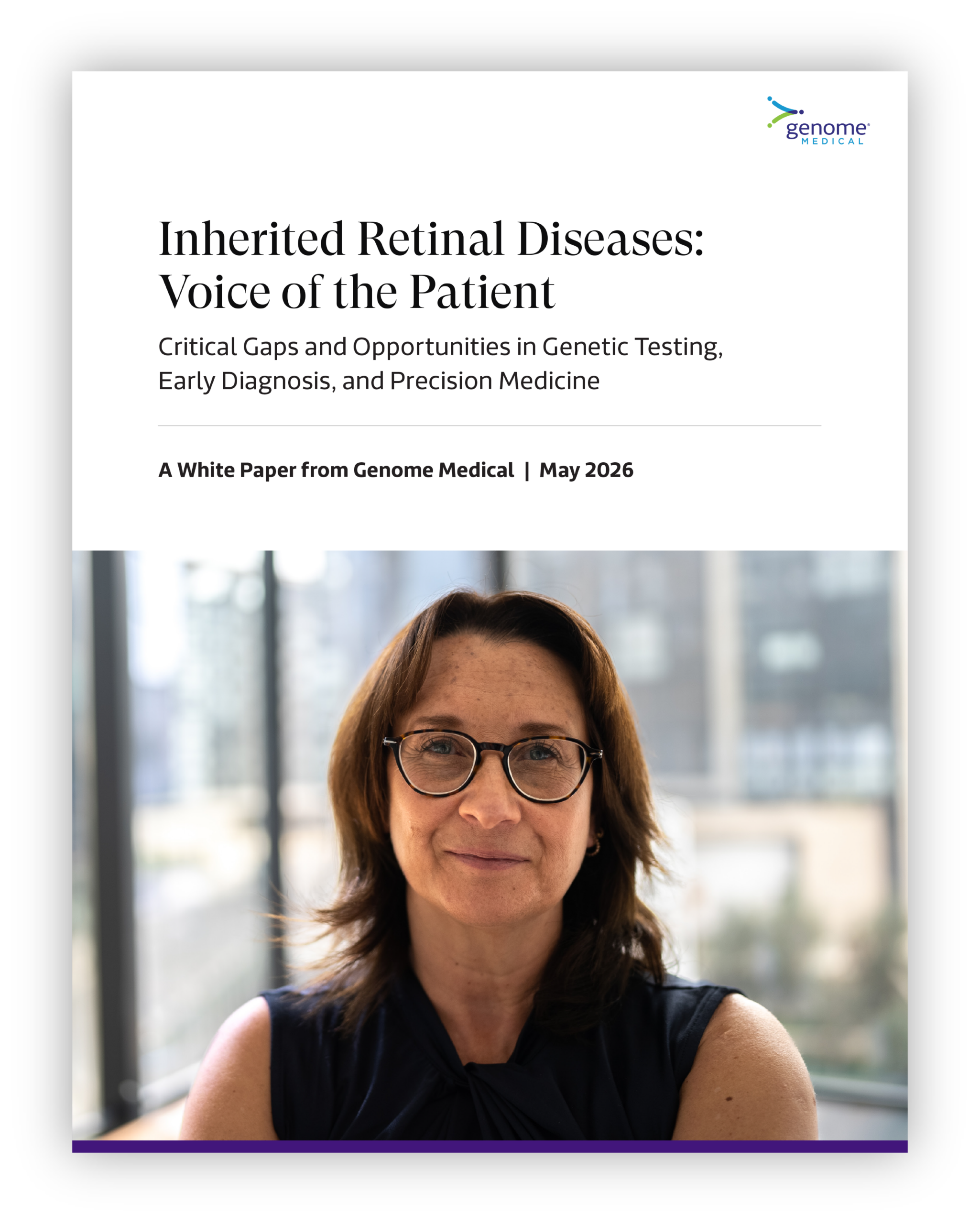
SOUTH SAN FRANCISCO, CA, UNITED STATES, May 27, 2026 /EINPresswire.com/ -- Genome Medical, a leading provider of telehealth-enabled genetic services, today released Inherited Retinal Diseases: Voice of the Patient, a new white paper documenting the diagnostic challenges, unmet needs, and precision medicine opportunities facing patients and families living with inherited retinal diseases (IRDs). Drawing on surveys of a nationwide patient cohort and peer-reviewed literature, the report provides a comprehensive look at the barriers that stand between patients and life-changing therapies and highlights opportunities for improvement.— Jill Davies, Chief Executive Officer of Genome Medical
IRDs are among the most genetically complex conditions in medicine, with pathogenic variants identified in more than 280 genes. They affect an estimated 5.5 million people worldwide and are a leading cause of blindness among working-age adults. Despite the 2017 approval of the first FDA-approved gene therapy for an IRD, the vast majority of patients remain without a disease-modifying treatment, and many without even a genetic diagnosis.
Key findings from the report:
- The diagnostic odyssey is long. Nearly half of surveyed patients waited more than five years from their first vision symptoms to completion of genetic testing — a delay with real consequences in a group of progressive, irreversible conditions.
- Genetic testing transforms care, but only when patients can access it. When patients receive guideline-recommended testing, 74% of surveyed patients said it confirmed their diagnosis, and 25% received a diagnosis they didn't have before. Yet navigational and financial barriers continue to keep many patients from getting tested.
- The burden of IRD goes far beyond visual acuity. Even patients with relatively preserved vision carry a heavy symptom burden that affects mobility, employment, relationships, and identity in ways that standard clinical measures fail to capture.
- Patient enthusiasm for emerging gene therapies is high, and trial interest is nearly universal. Patients are ready for precision medicine but access lags behind.
These findings carry direct implications for organizations working to advance therapies in the IRD space. More than 30 therapeutic programs are now in clinical development for IRDs, spanning gene augmentation, RNA-based approaches, gene editing, and gene-agnostic strategies. Addressing these gaps in genetic testing access and patient identification will be essential to ensuring that the patients who stand to benefit most from these emerging therapies can actually reach them.
The white paper also argues that the strategic value of genetically characterized, clinically engaged patient cohorts will only grow as the pipeline matures — not only for trial recruitment, but for the natural history data, patient-reported insights, and genotype-phenotype correlative studies that will shape endpoint selection, regulatory strategy, and commercial planning.
"The patients we surveyed are informed, motivated, and ready for what's coming in the IRD pipeline," said Jill Davies, Chief Executive Officer of Genome Medical. “But getting transformative therapies to the patients who need them most requires collaboration across the entire ecosystem — from genetic testing and counseling to clinical development and patient advocacy. That's the opportunity this white paper points to, and it's one we can only realize together."
The full white paper is available at www.genomemedical.com.
Inherited Retinal Diseases: Voice of the Patient is the latest in Genome Medical's Voice of the Patient series, which has previously examined the patient experience in cardiomyopathy and genetic epilepsy.
About Genome Medical
Genome Medical is transforming the landscape of rare disease care, bringing hope and answers to those navigating rare conditions. As the leading provider of telehealth-enabled genetic services, we bridge critical gaps in access, ensuring that individuals and families affected by rare conditions receive the expert guidance they need. Through timely genetic counseling, streamlined test ordering, clinical trial recruitment and patient-reported insights, we accelerate diagnoses and connect patients with potential life-changing treatments. In collaboration with life science organizations, health systems, and genetic testing labs, we are ensuring every person with a rare disease has a clearer path to care, support and breakthrough therapies. Learn more at www.genomemedical.com.
Marketing
Genome Medical
marketing@genomemedical.com
Legal Disclaimer:
EIN Presswire provides this news content "as is" without warranty of any kind. We do not accept any responsibility or liability for the accuracy, content, images, videos, licenses, completeness, legality, or reliability of the information contained in this article. If you have any complaints or copyright issues related to this article, kindly contact the author above.
